Solar power has become one of the most popular upgrades for boat owners in Southern California, and with good reason. Our service area enjoys 300 or more days of sunshine per year, making solar an exceptional investment for anyone who spends meaningful time aboard their vessel. But the most common question we hear at Sea Wave Services is simple: how much solar do I actually need? This guide walks you through the answer step by step.
Step 1: Calculate Your Daily Power Consumption
Before a single panel is selected, you need to understand how much power your boat actually uses in a typical 24-hour period. This is your daily amp-hour (Ah) consumption figure, and everything else in your solar design is built around it.
To calculate it, list every electrical load on your boat and estimate how many hours per day each one runs. Multiply the load’s current draw (in amps) by the hours it runs, and add everything together.
| COMMON BOAT LOAD | TYPICAL DRAW (A) | HOURS/DAY | DAILY Ah |
| 12V Marine Refrigerator | 4 to 6A | 24 hrs | 96 to 144Ah |
| Navigation Instruments | 1 to 2A | 10 hrs | 10 to 20Ah |
| Autopilot | 3 to 5A | 8 hrs | 24 to 40Ah |
| LED Lighting (all cabins) | 1 to 2A | 5 hrs | 5 to 10Ah |
| VHF Radio (receive only) | 0.5A | 12 hrs | 6Ah |
| Watermaker (when running) | 6 to 10A | 2 hrs | 12 to 20Ah |
| Phone and tablet charging | 1 to 2A | 4 hrs | 4 to 8Ah |
| TYPICAL CRUISER TOTAL | — | — | 157 to 248Ah |
Step 2: Understand Your Solar Harvest in Southern California
Once you know your daily consumption, you need to understand how much energy your panels can realistically produce per day. This is determined by Peak Sun Hours — the number of hours per day during which sunlight intensity is equivalent to 1,000 watts per square metre.
In the Orange County and San Diego region, you can reliably plan for 5 to 6 peak sun hours per day during summer months, and 4 to 4.5 hours during winter. For planning purposes, we use 5 hours as a conservative annual average.
A 200-watt solar panel in our service area will produce approximately 200W x 5 hours = 1,000Wh per day. At 12 volts, that is roughly 83Ah per day. Two 200W panels give you approximately 166Ah per day — enough to cover most coastal cruisers.
Step 3: Size Your Battery Bank to Match
Your solar panels need a battery bank large enough to store the energy they produce and to provide power overnight or on cloudy days. The general rule is to have enough storage for at least 2 days of consumption without any solar input. For a boat consuming 150Ah per day, that means a minimum of 300Ah of usable capacity.
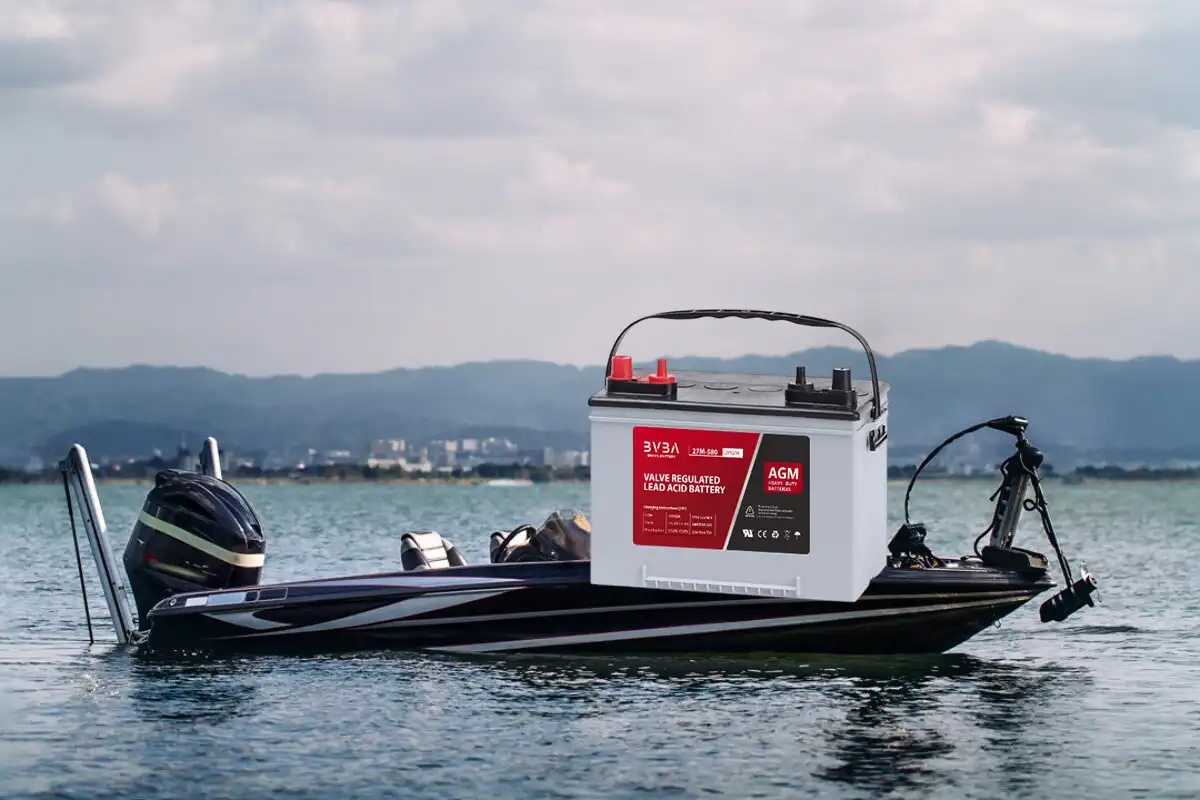
This is exactly why we recommend pairing solar installations with LiFePO4 battery upgrades. AGM batteries only deliver 50% usable capacity, meaning a 300Ah usable bank requires 600Ah of AGM. The same usable capacity can be achieved with approximately 375Ah of LiFePO4 — at significantly lower weight.
Step 4: Choose the Right MPPT Charge Controller
The MPPT (Maximum Power Point Tracking) charge controller is the brain of your solar system. It converts the output of your panels into the correct charging voltage and current for your battery bank, maximising the energy harvested from every hour of sunlight.
At Sea Wave Services, we install Victron SmartSolar MPPT controllers on all our solar installations. They integrate directly with the Victron GX monitoring ecosystem, allow remote monitoring via the VictronConnect app, and are compatible with both AGM and LiFePO4 battery banks. Controller sizing is determined by your total panel wattage and battery bank voltage.
Book a Free Marine Solar Sizing Consultation
Sea Wave Services designs and installs complete marine solar systems from Orange County to San Diego. We assess your vessel, calculate your actual power requirements, and design a system sized exactly for your needs — panels, controller, wiring, and battery integration included. Call 949-342-5423 or visit seawaveservices.com.